
Purpose, vision, mission, and values are not yet visible in daily choices.
The organizational gap
Close the gap between the organization you declare and the organization people experience.
Impact Forge uses the Six Cs to turn purpose, vision, mission, and values into strategy, roles, SOPs, and daily practice. Once that human path is coherent, a bounded workflow proof can show where AI responsibly extends capability—and where it should not.
Verify your email, invite your teammates, then take your own eight-question assessment.
Prefer to talk first? No completed assessment is needed for a team workshop conversation. Booking opens the 30-minute “Impact Forge Leadership Compass Deep Dive.” No purchase required.
Leader email verificationTeams of 3–50Each person chooses whether to contributeShared report after the deadline, with at least three contributors.
Restore human agency and unleash humanity’s potential—in partnership with superintelligence.

William has served leaders and teams at
- Analog Devices
- Driscoll’s

- Nicor Inc.


- Princess Cruises
- Department of Homeland Security


Your team’s path
See the gap. Talk it through. Choose what comes next.
Choose a free 30-minute team conversation with William, or start with the Team Gap Assessment. Explore what matters, choose a priority and decide whether a workshop fits. The next services are choices, not required purchases.
- 01
Explore your team’s starting point
Each teammate sees a private result and chooses whether to contribute. A shared report needs the deadline and at least three voluntary contributions. A solo team reflection remains a separate personal view.
Your starting pointA picture to discuss, not a diagnosis or employee score.
- 02
Have a free 30-minute conversation with William
Bring your chosen gap and one real workflow, with or without assessment results. Clarify what matters, the change you want and whether a workshop fits. His AI Chief of Staff helps prepare and structure the plan.
Your choiceA direction you can use, with no charge or purchase requirement.
- 03
Choose a paid on-site half-day plan
If it fits, the next offer is preparation around one workflow, four hours with William and a written 90-day action plan for up to about 12 leaders. We review the detailed offer after your conversation; travel is separate.
Plan firstImplementation and ongoing measurement are separately scoped, optional work.
- 04
Choose the support your team needs next
The optional ten-week Company Cohort format of AI Native Leadership Certification or separately scoped AI Native Enterprise can follow. 100% of the paid half-day workshop counts toward a directly related engagement; the proposal states scope and remaining balance. A measured implementation proof may be commissioned separately after the plan. It is not required before the workshop. Explore Company Cohort →
Agreed scopeClear responsibilities, human boundaries and a written scope before commitment.
The gap and its cost
The cost begins when stated purpose and lived reality separate.
When purpose, vision, mission, and values do not become strategy, roles, SOPs, and daily practice, people absorb the ambiguity. Customers feel the inconsistency. AI can amplify that gap before the organization has chosen what the technology should serve.
Strategy, roles, incentives, and SOPs tell different stories.
Employees and customers experience a gap between promise and practice.
AI pressure magnifies the gap before leadership has aligned the human system.
Restore human agency and unleash humanity’s potential—in partnership with superintelligence.
The main method
The Six Cs close the organizational gap.
Calling names purpose and the gap. Coherence connects vision, mission, and values to strategy and responsibility. Capacity equips people and systems. Commitment turns the path into roles, SOPs, and daily practice. Contribution makes value visible. Calibration learns from reality and chooses what comes next. We test value in one real workflow before deciding what to grow.
Open the Six C PlaybookChoose your starting point
Begin with a shared team picture—or explore on your own first.
Team Alignment is the shared path for a leader and 3–50 people. Verify your email, invite the team, and begin with your own eight-question view. Each person sees private results first and decides whether to contribute. The shared report opens after the response deadline once at least three people contribute.
Preparing the human-first continuation…
From purpose to practice
Turn what the organization stands for into how the work actually happens.
We begin with the organizational gap and the human cost of leaving it open. The path connects purpose, vision, mission, and values to strategy, roles, SOPs, everyday decisions, and the experience of employees and customers.
The first coherent pathPurpose → Strategy → Roles → SOPs → Practice
Then one bounded proof can test whether AI improves contribution without unacceptable human or operating cost.
Two lanes. Two units of change.
Leader certification and enterprise deployment solve different problems.
Both build human agency and practical proof. Certification develops leaders in either format. AI Native Enterprise changes a working system; its scope and price are agreed in writing before you commit.
AI Native Leadership Certification
- What changes
- The leader
- Primary work
- Judgment, coherence, human capacity, AI fluency, and applied leadership practice
- Proof
- Demonstrated practice and important work owned by the participant
AI Native Enterprise
- What changes
- One important working system
- Primary work
- Purpose, executive ownership, culture, workflow, knowledge, governance, and capability transfer
- Proof
- Observed movement against a baseline without unacceptable human or operating cost
Certification may become part of capability transfer after a real organizational proof exists. It is not a substitute for aligning the system itself.
The human behind the architecture
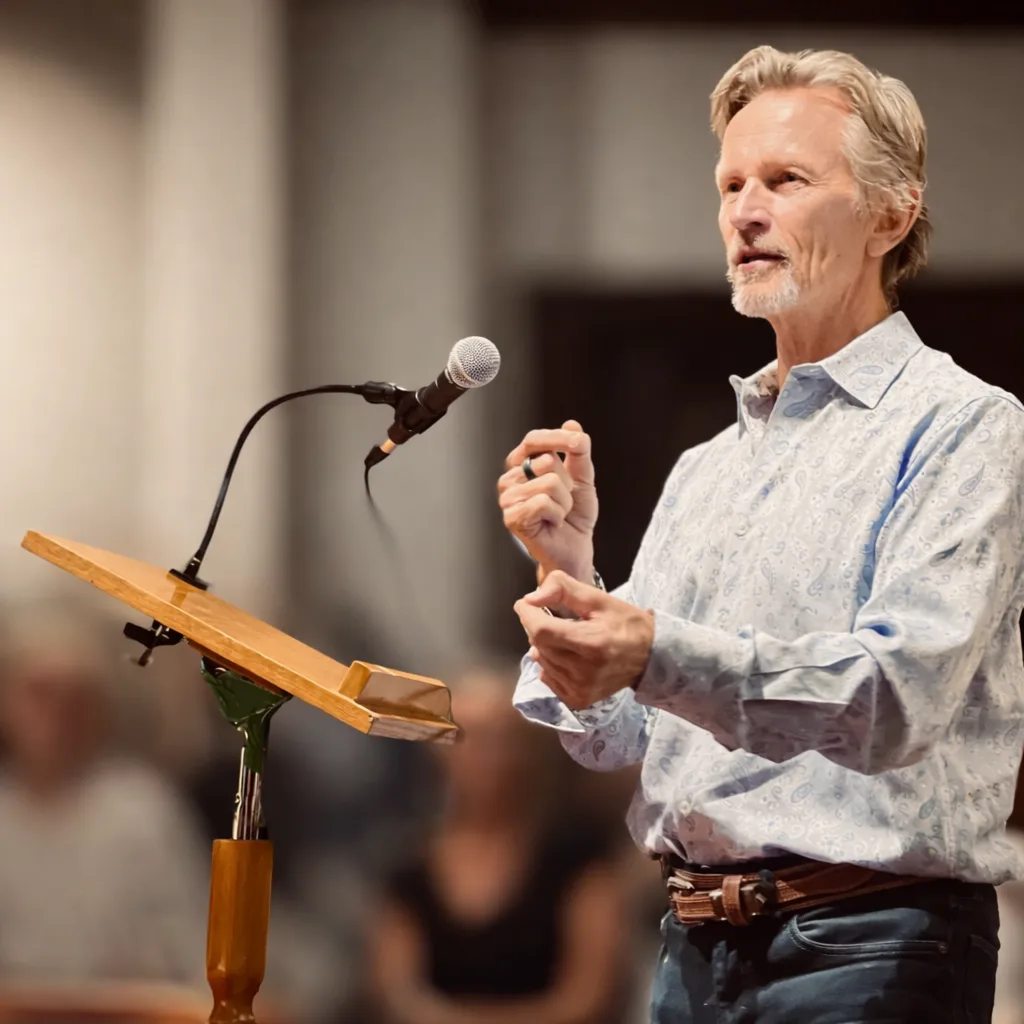
William Poett leads from inside the work.
William is Impact Forge’s sole human leader and Human Systems Architect. AI functional owners support the work under his direction. Bounded specialist providers may support a separately agreed scope. William approves consequential scope and terms; delivery responsibilities are confirmed for each engagement.
For a senior leader, that distinction matters. This is not a tool rollout dressed up as strategy. It is a disciplined way to bring purpose, people, workflow, knowledge, and accountability into the same room before asking AI to move faster.
FounderBuilds the operating architecture.
TeacherTurns doctrine into practice.
StewardProtects agency while capability grows.
“The question is not what AI can do. It is what this organization is ready to become responsible for.”
The Six C organizational path
Move from the gap to lived contribution—then calibrate.
The main work is aligning the human system. Workflow proof appears inside Contribution, after purpose, strategy, roles, capacity, and daily practice are clear enough to test responsibly.
- 01
Calling — name the gap
Listen to leaders, employees, and customers. Clarify the organization’s purpose and the lived reality it is here to change.
OutputA shared statement of purpose, present reality, and the gap that matters.
- 02
Coherence — align the system
Turn vision, mission, and values into strategy, decision rights, roles, incentives, boundaries, and operating priorities.
OutputOne coherent path from purpose to responsibility.
- 03
Capacity — build what people need
Develop the human capability, knowledge, tools, support, and feedback people need to carry the strategy without losing judgment.
OutputA practical capacity plan owned by the people doing the work.
- 04
Commitment — make it daily practice
Translate priorities into roles, SOPs, team agreements, review rhythms, and protected commitments people can practice consistently.
OutputA living operating system with clear ownership and human boundaries.
- 05
Contribution — prove value in reality
Only after the path is aligned, test one bounded human-AI workflow against a baseline, quality bar, human review, and stop criteria.
OutputObserved value and cost—not an adoption story.
- 06
Calibration — learn and choose
Review value, quality, trust, privacy, agency, maintenance, and unintended effects before choosing to go, revise, wait, or stop.
OutputA clear decision, an accountable owner, and the next responsible move.
The capability-transfer layer
Keep expertise in the organization.
The most valuable knowledge is not just a task list. It includes what experienced people notice, the questions they ask, how they recognize risk, and where judgment must remain human.
We preserve that knowledge with the people who hold it. The result is a versioned playbook with examples, exceptions, human-only boundaries, AI limits, ownership, and a review rhythm.
Living playbook
A versioned system that keeps learning
- Purpose and stakeholder served
- Decision rules and quality thresholds
- Examples, exceptions, and failure modes
- Human-only and AI-supported work
- Evidence, owner, feedback, and review cadence
Supports judgment. Never erases accountability, context, consent, or professional review.

A longer view
Make the next move more responsible than the last.
The strongest enterprise work is not the loudest. It leaves the organization with better judgment, clearer ownership, and a living system that can keep learning after the room is gone.
Flow gets us coherent. Grow trains our Ability To Respond. Create makes it real.
Evidence before expansion
Measure proof before you expand.
A responsible deployment can create value and still fail if it erodes trust, quality, privacy, agency, or maintainability. The review holds the whole system.
Every bounded proof checks
- One accountable owner and a baseline agreed before intervention
- Human-only judgment, review, override, and rollback made explicit
- Quality, privacy, trust, adoption, and maintenance tracked together
- Contributor consent, attribution, agency, and context preserved
- A go, revise, wait, or stop decision based on observed evidence
Grow with purpose
Learn from the work. Choose the next step.
Start with a workflow that matters. Review what changed, what your people need and what it takes to sustain the improvement. Then decide together whether to expand, adjust or stop.
Automate stable loops. Preserve human judgment. Keep override and rollback real.
Direct answers
Before you bring a system into the room.
Who is this enterprise path designed for?
It is designed for a CEO, COO, president, CHRO, operating partner, or system owner responsible for an important workflow, decision, handoff, or knowledge system under AI pressure. The work requires an accountable owner, access to current reality, and willingness to value a responsible stop as much as an attractive go.
How is this different from AI Native Leadership Certification?
AI Native Leadership Certification develops leaders through Private Training or Company Cohort. AI Native Enterprise changes a working system: its purpose, leadership behavior, team agreements, knowledge, workflows, governance, and proof. Certification can support capability transfer, but it is not the enterprise engagement itself.
Is this generic AI consulting or a tool-selection service?
No. The work starts with responsibility, current reality, and the system AI would amplify. Tool selection can follow only when purpose, ownership, workflow, data, judgment boundaries, risk, and proof criteria are clear.
How do you decide when to expand?
We begin with a focused engagement and use what we learn to decide the next step. Scope, price, responsibilities and data boundaries are agreed in writing before you commit. Wider rollout is a separate decision based on the results.
How is success measured?
The accountable owner defines a baseline and proof target before work begins. The review considers observed movement alongside quality, privacy, trust, human agency, adoption, maintenance burden, direct cost, and unintended consequences. No single coherence score or guaranteed ROI is used as a substitute for judgment.
What happens first?
Choose a free 30-minute team conversation with William, or start with the Team Gap Assessment. For a shared round, the leader verifies their email, invites 3–50 people and begins their own eight-question view. Each person sees private results first and decides whether to contribute ratings. The shared report opens after the response deadline once at least three people contribute. An individual reflection remains available as a separate path. A completed assessment is optional for a team workshop conversation; later paid support is optional too.
One leader. A stronger team. A wider contribution.
Let useful practice earn its next step.
Your team path can begin with a free 30-minute conversation with William or the Team Gap Assessment. A paid half-day plan, the optional Company Cohort format of AI Native Leadership Certification and separately scoped AI Native Enterprise are distinct next choices. You do not need a private individual certification to begin team work.
For your own development, standalone Chief of Staff activation and Private Training format of AI Native Leadership Certification remain separate individual offers. Private Training includes activation; a paid standalone activation counts 100% toward its tuition.
The next responsible move
Discover what your team could become.
If you are responsible for how purpose is experienced at work, choose a team conversation or a reflection to find your next step.
A free 30-minute conversation with William about your team and workshop options. The Team Gap Assessment is optional. Booking opens the 30-minute “Impact Forge Leadership Compass Deep Dive.”
Shared Team Alignment · 3–50 peopleSee what your team could unlockCreate a private round, invite your team, and begin with your own eight-question view. Each person chooses whether to contribute to the shared report.
See the team path and beginPrefer to see your own pattern first? Preview a solo reflection.
After completing your Team Gap Assessment, want support with the next step? See the free 30-minute First Win session.